
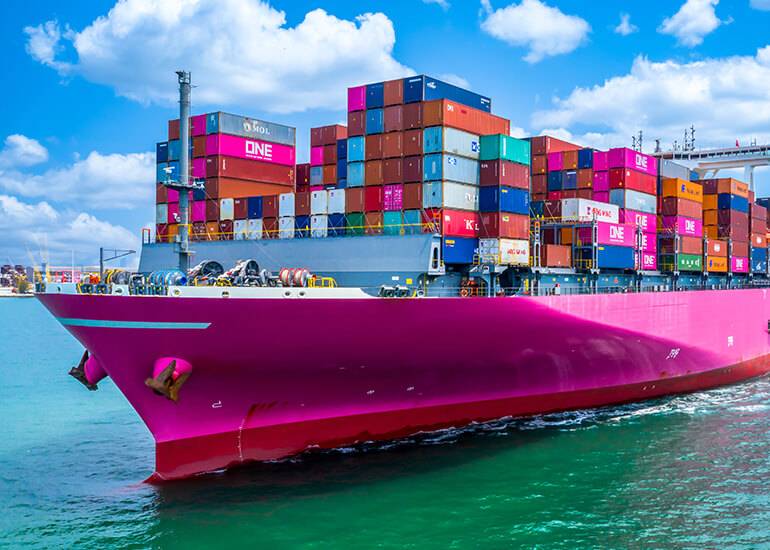
For any business importing goods into Saudi Arabia, customs clearance is usually the part of the supply chain that causes the most delay when it goes wrong. It’s also the part that’s easiest to get right when it’s planned for properly. The process runs through Fasah, the Kingdom’s unified digital platform for import and export, working in coordination with the Zakat, Tax and Customs Authority (ZATCA).
The rules around this process have kept evolving, and 2026 has brought a few changes that importers who haven’t reviewed their customs setup recently should be aware of.
How the Fasah Process Works
Fasah functions as the single digital window connecting importers, exporters, customs brokers, and government agencies, so that the documentation and data needed to clear a shipment moves through one coordinated system rather than multiple disconnected ones. Before goods can move, an importer or their appointed agent needs to be registered on the platform and have a customs number on file.
From there, the standard sequence is straightforward on paper. The importer or broker uploads pre-arrival data and required documents (commercial invoice, packing list, certificate of origin, and any relevant conformity certificates) into the system ahead of arrival. Once the shipment reaches port or airport, customs either accepts the declaration electronically or flags it for physical inspection. ZATCA then issues the duty and VAT assessment, which must be settled before release.
[Suggested image: shipping containers at a Saudi port with customs/logistics staff reviewing documentation]
What Changed in 2026
As of May 2026, the Saudi Ports Authority (MAWANI) introduced a requirement for mandatory 6-digit HS codes and cargo volume data on all shipping manifests. For importers and their logistics partners, this means manifest data needs to be accurate and complete earlier in the process than some were previously used to. Incomplete or generic HS coding is now more likely to trigger delays or holds, rather than getting resolved after arrival.
Separately, registration in Fasah is now tied to the Authorized Economic Operator (AEO) program, which gives compliant, well-documented importers faster processing and fewer inspections. Businesses with a consistent compliance record have a real incentive to formalize that status rather than treat each shipment as a one-off.
Where Importers Run Into Trouble
Most avoidable delays trace back to the same few issues: incomplete or mismatched documentation between the commercial invoice and the packing list, missing or incorrect certificates of origin and conformity for regulated goods, and, increasingly since the 2026 changes, incomplete HS code or cargo volume data on the manifest itself. None of these are complex problems individually, but each one is enough to stall a shipment at port while it gets corrected.
Working with a customs broker who manages Fasah submissions routinely, rather than occasionally, tends to catch these issues before they reach the port rather than after.
[Suggested image: close-up of customs declaration paperwork and a laptop showing the Fasah platform interface]
The Case for the AEO Program
For businesses that import regularly rather than occasionally, pursuing Authorized Economic Operator status is worth serious consideration. The program is built around rewarding a demonstrated compliance record with faster processing and a reduced rate of physical inspections. That translates directly into more predictable lead times for inventory planning.
The application process does require an upfront investment of time to document internal processes and compliance history, and it’s not the right fit for a business that imports a handful of shipments a year. But for an importer moving regular volume into the Kingdom, the reduction in inspection-related delays alone often justifies the effort within the first year.
[Suggested image: warehouse worker scanning inventory with a handheld device, shipping containers in background]
Planning Ahead Rather Than Reacting
The businesses that move goods through Saudi customs with the fewest delays are usually the ones that treat documentation as part of the shipping process itself, not a step that happens after the goods are already en route. Building in time to register correctly, confirm HS codes ahead of shipment, and verify certificate requirements for the specific product category goes a long way toward avoiding the kind of last-minute scramble that costs both time and demurrage fees.
Working with a logistics partner who handles Fasah submissions as a routine part of their service, instead of treating customs as a separate hand-off to a third party, also reduces the number of places communication can break down between booking a shipment and clearing it at port.
Customs clearance in Saudi Arabia isn’t inherently complicated, but it punishes incomplete preparation. The 2026 manifest requirements have raised the bar slightly on what “complete” means. Working with a logistics partner who tracks these changes as a matter of course removes one more variable from an already complicated supply chain.
Compass Logistics provides customs clearance, freight forwarding, and supply chain management services across Saudi Arabia, Qatar, and the UAE. Get in touch to discuss your import requirements.